
Officers of India's third largest oil firm Hindustan Petroleum Corp on Thursday began an indefinite agitation against "arbitrary and autocratic" style of company management.
At least half a dozen national and international oil giants, including Reliance and Royal Dutch Shell, joined the race, on Friday, for acquiring government's 34 per cent stake in Hindustan Petroleum Corporation Ltd.

Adani is the fastest growing energy company in Asia-Pacific and the second fastest in the world

Dividends paid by central public-sector enterprises (CPSEs) in 2024-25 are set to be the highest ever, with the government receiving 69,873 crore so far. A government official said he was hopeful the receipts would touch 70,000 crore in the last week of the financial year.

OMCs' Digital India move is likely to have an impact on more than 80.3 million Pradhan Mantri Ujjwala Yojana consumers, majority of whom are not exposed to digital transact.

Indian Oil Corp is ranked highest at 161st in the Fortune 500 list.

'The universe of PSU stocks is huge and diverse.' 'Investors should bet on specific sectors and stocks from the basket as most of them may continue to consolidate after years of outperformance.'

Government-controlled oil-marketing companies (OMCs) have held back petrol and diesel price revisions for a week and are expected to continue doing so, ostensibly owing to political reasons. It appears that the Centre has informally conveyed to the three major OMCs to not revise fuel prices for the time being, two people in the government said. This informal directive follows the talks between the Centre and states on cutting taxes and bringing the auto fuels under the good service tax regime not fetching the desired results, so far.
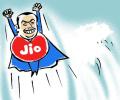
Billionaire Mukesh Ambani's Reliance Jio is India's strongest telecom brand in India, ahead of Bharti Airtel and Vodafone Idea Ltd, according to brand intelligence and data insights company TRA. TRA, formerly Trust Research Advisory, in its 'India's Most Desired Brands 2022' ranked companies according to their brand strength. Reliance Jio topped the telecom category, followed by Bharti Airtel, Vodafone Idea Ltd and BSNL.

Moody's Investors Service on Wednesday raised the rating outlook for 18 Indian corporates and banks, including Reliance Industries, Infosys, SBI and Axis Bank, to 'stable' from 'negative'. This follows the upgrade by the US-based rating agency in India's sovereign rating outlook to 'stable' from 'negative' on Tuesday. The agency had affirmed the sovereign rating at 'Baa3'.
The market responded positively to the Q1 results of oil marketing companies (OMCs), Bharat Petroleum Corporation (BPCL) and Hindustan Petroleum Corporation (HPCL) despite numbers being weaker than consensus. BPCL's reported gross refining margin (GRM) was in line at $7.9 per barrel (bbl) in Q1FY25, which implies marketing margin stood at Rs 4.8 per litre. Standalone profit after tax or PAT at Rs 3,000 crore was down versus consensus due to under-recoveries in LPG business.

State-owned Indian Strategic Petroleum Reserves Ltd (ISPRL), which operates India's strategic crude oil storage, will make awards by December to lease around 1 million tons of crude oil storage space (7.3 million barrels) at two of the country's three existing Strategic Petroleum Reserves (SPRs), around a fifth of the total SPR capacity. This will enable the refilling of crude caverns even as escalating hostilities in the Gulf threaten disruptions in crude supplies, two industry sources said.

Tata Sons stake in the group's listed companies is now worth Rs 9.28 trillion, up 34.4 per cent on a year-on-year (YoY) basis. In comparison, the Government of India's stake in listed central public sector undertakings (PSUs) is currently valued at Rs 9.24 trillion

IOC protests, says have invested in these facilities over a period of time.
Escalation of the conflict in West Asia between Israel and Iran has had a direct impact on the energy markets, and more broadly on the financial markets as well as the global economy.

Other shortlisted chief executives include Abdulrahman Ali Al-Abdulla of Muntajat, Peabody Energy's Gregory Boyce, Pailin Chuchottaworn of PTT Public Company Ltd, Repsol's Antonio Brufau and Ian Taylor of Vitol.

International oil prices continue to be extremely volatile, falling on one day and rising thereafter, a top oil ministry official said explaining the reason behind no reduction in petrol and diesel prices despite softening in input cost, but could not say if the rates will be cut before Maharashtra elections. Global oil benchmark Brent crude futures fell below $70 per barrel last week -- the first time since December 2021 -- but gained thereafter. Brent was trading at $74.58 per barrel on Thursday while West Texas Intermediate advanced to trade at $71.71.

The 12-digit unique number that the UIDAI will generate will be combined with the the smart card project of the Oil Ministry for distribution of PDS kerosene and domestic LPG through biometric identification of beneficiaries.
Profits of the country's oil marketing companies - Indian Oil Corporation, Bharat Petroleum Corporation and Hindustan Petroleum Corporation - fell by as much as 29 per cent in 2007-08 in spite of an up to 56 per cent rise in the oil bonds these companies received during the year compared with 2006-07.

Today, less than six weeks into the 2011-12 financial year, the government used up its entire budgetary provision of Rs 20,000 crore (Rs 200 billion) for petroleum subsidy.
They want more cash, forex, higher bond coupons and increase in market prices for petrol, diesel, LPG.

Russian energy giant Rosneft has appointed a former Indian Oil Corporation (IOC) director to its board in signs it may be looking at boosting trade links with India. G K Satish, who retired as director for business development at IOC in 2021, is one of the three new faces appointed to the 11-strong board of directors of Rosneft, according to a statement issued by the Russian firm. Satish, 62, is the first Indian to be appointed to the board of Rosneft.
In a step towards dual pricing of domestic cooking gas, the government has decided to allow oil-marketing companies to sell the fuel at market prices in distinct fibreglass cylinders. IOC, BPCL and HPCL will sell these cylinders in Bangalore, Mumbai and Pune, which have been identified as test beds for the pilot project. The companies could revise fuel prices for transparent cylinders as LPG for them will not be subsidised. Feasibility of this project is yet to be adjudged.
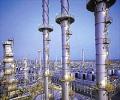
BPCL plans to save Rs 500-800 cr, while HPCL eyes 10% reduction in total costs.
The government has decided to go ahead with the privatisation of Hindustan Copper Ltd, setting aside concerns over the fate of units, which were partially nationalised.
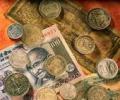
According to data compiled by BS Research Bureau for BSE 100 companies, seven public sector companies -- Indian Oil Corporation (IOCL), Bank of India, Union Bank, Bharat Petroleum (BPCL), Oil and Natural Gas Corporation (ONGC), Hindustan Petroleum (HPCL) and GAIL -- have reduced their employee costs ranging from one per cent to 21 per cent.

Sources said a meeting of heads of the oil marketing companies -- Indian Oil, Bharat Petroleum and Hindustan Petroleum -- was called off.
The bonds, which will come over and above Rs 61,800 crore (Rs 618 billion) already issued to the three companies, would help them bridge the revenue loss they incurred on sale of petrol, diesel, liquid petroleum gas and kerosene in 2008-09, a petroleum ministry official said.
Full-service carrier Kingfisher Airlines has sought permission from the petroleum ministry to extend the date for paying dues to public sector oil companies for aviation turbine fuel.

With the government putting off an increase in diesel prices, Petroleum Minister Murli Deora sought an increase in government subsidy to bail out the three oil marketing companies (OMCs). Deora met finance minister Pranab Mukherjee in Mumbai to seek an immediate release of `10,000 crore as interim subsidy to Indian Oil Corporation, Bharat Petroleum Corporation and Hindustan Petroleum Corporation.
The government has issued 6.35 per cent Oil Marketing Companies Government of India Special Bonds, 2024 for Rs 22,000 crore (Rs 220 billion) to three oil marketing companies.
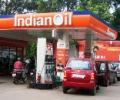
State-run oil marketing companies Indian Oil, Hindustan Petroleum and Bharat Petroleum are likely to lose Rs 45,478 crore (Rs 454.78 billion) this fiscal on selling fuel below cost, Petroleum Minister Murli Deora said.

With the new Bharat Stage IV emission norms coming into effect from Thursday, oil companies are gearing up to meet the requirements of Mumbai, an official said on Friday.
The average price of Indian basket of crude oil during 2007-08 (upto August) has increased to $68.34 per barrel as compared to 62.46 dollars a barrel during 2006-07.

HPCL holds 50 per cent in Prize Petroleum while ICICI Bank has 35 per cent, ICICI Ventures 10 per cent and HDFC Bank 5 per cent.
In a marginal relief to consumers, IndianOil, the biggest oil marketing company, has cut petrol prices by Rs 0.56 per litre with effect from midnight today.
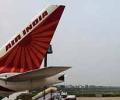
"Air India is unable to pay even after a 90-day credit period. They owe us about Rs 300 crore without interest. There is also no bank guarantee from Air India to any of the oil marketing companies. We do not know when will the company honour its dues," said a BPCL official on condition of anonymity.
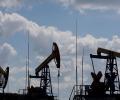
India's crude oil imports from Russia fell for a second straight month in January to its lowest in 12 months but the nation's insatiable appetite for Russian crude remains for the long term, according to data from energy cargo tracker and industry officials. Russia supplied 1.2 million barrels per day of crude oil to India in January, down from 1.32 million barrels in December and 1.62 million barrels in November 2023, according to data from energy cargo tracker Vortexa. Russia however continues to remain India's top oil supplier, accounting for a little less than a quarter of 4.91 million barrels a day of oil that the world's third largest energy consumer imported in January.
